Why you might be doing everything right and still not seeing results
There are two things we hear again and again in clinic.
The first is from patients who feel they are doing everything right and still not seeing the results they expected. They are eating well, investing in skincare, looking after themselves and trying to be consistent, but something still feels off.
The second is from patients who feel overwhelmed by conflicting advice. One article tells them to cut something out. Another says to add something in. One expert recommends a particular treatment or routine, while someone else says the opposite. After a while, it becomes hard to know what is actually worth doing.
Both experiences are real. And in many cases, both have the same root problem.
The problem with advice built for the average person
Most health and wellness advice, even when it is well intentioned, is built for a general population. It is based on what tends to work on average.
But average is not the same as individual.
Your skin, metabolism, hormones, energy, recovery, and nutritional needs are personal. They are shaped by your biology, your lifestyle, your stress levels, your habits, and the specific way your body responds to the world around it.
That is why two people can follow the same advice, make the same effort, and get very different results.
Instead of trying harder with the wrong information, suddenly it feels easier and works better because the advice is built for you.
What personalised health actually means
Personalised has become a very common word in health and wellness. But when it is used properly, it should mean something specific.
It should mean that recommendations are based on your own biology, not simply adapted from general advice. It’s not just changing how much of a supplement you take, but whether that is even the right thing for you to begin with.
At MAP Health, that means looking at multiple layers of personal data, including genetics, blood biomarkers, glucose response, and lifestyle, to understand what your body needs.
For someone concerned about skin, that can include factors linked to inflammation, collagen support, UV sensitivity, blood sugar regulation, nutrient status, stress and recovery. Those factors are not always obvious from the outside, but they can have a meaningful impact on how skin behaves and how well it responds to treatment.
This is where the difference begins. Instead of asking what usually works, we can ask what may be most relevant for this person.
A practical example
Imagine a patient whose main concern is lines and wrinkles. She uses good products, takes care of her skin and has regular treatments, but her progress feels slower and less consistent than expected.
When her data is reviewed through the MAP Health programme, a more detailed picture starts to emerge.
Her COL1A1 gene, linked to how the body produces collagen, suggests a lower baseline for structural support than average. In simple terms, her skin may be working with less natural resilience than most people start from.
Another genetic marker suggests a greater tendency towards collagen breakdown, particularly when UV exposure is part of the picture. That means the collagen she does have may be under more pressure over time.
Finally, another gene points to an increased tendency towards glycation, a process in which excess sugar-related damage can make collagen fibres stiffer and less resilient.
Individually, each of those factors matters. Together, they help explain why someone might be doing many of the right things and still feel that their skin is not responding as it should.
From there, the recommendations become more specific.
Sun protection becomes a higher priority. Instead of general good practice, we know UV exposure may be directly accelerating the pathways most relevant to her skin ageing.
Retinoids may be emphasised because they can support collagen renewal, which is particularly relevant when someone appears to have a lower natural baseline.
Vitamin C becomes more purposeful too, because of its role in collagen support and antioxidant protection.
If glucose instability is also part of the picture, nutrition and blood sugar management may matter not just for general health, but for skin quality and collagen, too.
That is what personalised means in practice. Not a longer list of products. A clearer understanding of which actions are most likely to matter, and why.
What MAP Health looks at
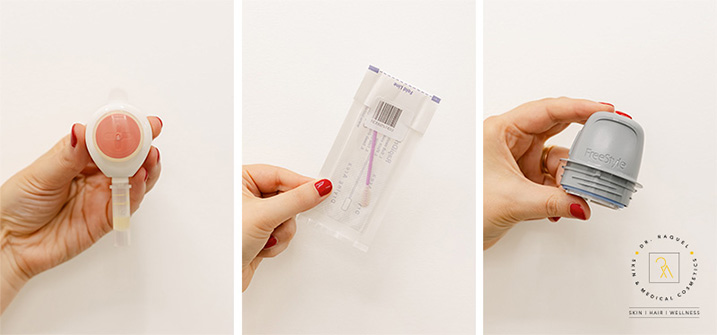
MAP Health brings together four types of information to create that picture.
Genetics
Genetics help show how a person may be predisposed to function. In relation to skin, that can include areas such as inflammation, collagen support, antioxidant defence, skin barrier function, UV sensitivity and nutrient handling. They can also help direct us to the most useful nutrients and even the diet type a person is likely to benefit from.
Genetics do not determine everything. But they can explain why one person may need a different strategy from another, even if their concerns look similar on the surface.
Blood biomarkers
Blood biomarkers provide a real-time view of what is happening in the body now.
This can include areas such as nutrient status, inflammation, metabolic health and other measurable factors that may influence skin, energy, recovery, weight loss or maintenance, and wider wellbeing.
That matters because results are not only shaped by what you do. They are also influenced by the internal environment supporting them.
Continuous glucose monitoring
Continuous glucose monitoring shows how the body responds to food, movement, and other factors in real time.
This is useful because blood sugar instability can affect much more than energy. It can also influence inflammation, cravings, mood, hormonal balance and skin quality.
For some patients, this is one of the most revealing parts of the process. It helps move conversations away from broad assumptions and towards patterns that can actually be seen and acted on.
Lifestyle data
Sleep, movement, stress, and daily routine provide the final layer of context.
These are often the factors that make good intentions harder to translate into good outcomes. Poor sleep, inconsistent recovery and ongoing stress can all affect how the body functions and how the skin looks and heals over time.
When that context is missing, it is easy to give advice that sounds sensible but does not fit real life. When it is included, recommendations become much more practical and much more relevant.
Why this matters in an aesthetic clinic
At Dr. Raquel Skin and Medical Cosmetics, we see many patients who are already highly engaged with their health and their skin. They are not looking for more information. They are looking for real, actionable advice that will make a difference.
Aesthetic treatments can be extremely effective, but results are also shaped by the internal environment supporting them. If inflammation, poor recovery, glucose instability or nutrient insufficiency are part of the picture, they may influence how skin behaves, how it heals and how well results are maintained.
Addressing those factors is not an alternative to aesthetic medicine. It is a way of strengthening it.
That is why MAP Health is relevant in a clinic setting. It helps bring a deeper level of understanding into the conversation, so that patients are not only treating what they can see on the surface, but also exploring the internal factors that may be influencing the result.
Dr Raquel works alongside MAP Health to ensure that this insight can sit meaningfully within a patient’s wider care plan, combining internal understanding with the clinical expertise you have come to trust.
Why patients find this valuable
For many people, the value is not simply in the tests themselves. It is in the clear understanding that comes from seeing their health in a more connected way.
Instead of collecting more generic advice, they can start to understand why certain things may have felt harder, why some approaches have underperformed, and where the most useful opportunities for change may be.
That can be especially powerful for patients who feel they have already been making a strong effort without fully understanding what their body specifically needs.
Find out more
If you have ever felt that you are doing everything right and still not seeing the results you expected, a MAP Health consultation is an opportunity to look deeper.
By combining genetics, blood biomarkers, CGM and lifestyle data, the programme helps build a clearer picture of what may be influencing your skin, energy, and wider wellbeing, and what to do with that information in a practical way.
MAP Health consultations are available at Skin and Medical Cosmetics in Kings Hill.
Book your MAP Health consultation at Skin and Medical Cosmetics today!